

 Facebook
 X
X
 Pinterest
 Copy Link
Local Autumn Traditions

These local autumn traditions highlight the changing of seasons. Bainbridge Island and neighboring towns host many enjoyable activities to get in the spirit of fall. Whether you’re kicking off the season with Oktoberfest, celebrating the spookiness of Halloween, or honoring loved ones who have passed, this season is packed with things to do.
Pumpkin Patch at Bainbridge Island/Suyematsu Farms
The pumpkin patch can be found at the Day Road location. This year, it includes a tractor ride around the pumpkin patch and a Kiddie Hay Maze. Plus, U-Pick Dahlias are also available while the blooms last. Keep an eye on their website and social media for updated event information or any weather related closures. It’s a local favorite!
Squash Hunt at Bloedel Reserve
This fun activity for the family runs from September 29 – November 1. Grab a map and look for decorative squash tucked throughout the gardens. Also, young explorers can grab a Passport from the Arrival Garden. There are destinations signs along the way where kids can create rubbings of each stop to complete their fall adventure. Don’t miss the photo opportunities at the Sheep Shed, as well as pumpkin tic tac toe and checkers. Timed tickets are recommended, and all activities included in general admission to the reserve. The tradition began in 2011 and has a fascinating history.
Bainbridge Oktoberfest
This event was so popular in 2025 it is coming back even bigger. Mark your calendar for October 3rd 2:00-9:00 PM for fun for the whole family. You’ll find German food, local beer and cider, live entertainment, costume contests, stein holding contests, and more. Held at the boathouse at waterfront park, this event is free to attend with food and beverage for purchase. Prost!
Bainbridge Gardens Pumpkin Walk
An Island favorite, the Pumpkin Walk at Bainbridge Gardens runs from October 1 – October 31. Walk along the Nature Trail and enjoy hundreds of hand-painted and crafted pumpkins, or bring your own creation to add. If you visit on a Saturday, you’ll find food trucks on site. This fun outing is free however, donations are accepted and will benefit the Bainbridge Island Boys and Girls Club. Don’t miss the many photo opportunities and mini straw maze for the tots. And don’t forget some fall plants from the nursery for your own home decor.
Trick or Tree: Candy Hunt & Festivities
In Poulsbo, the Olmsted Tree Farm will be hosting a glow-in-the-dark candy egg hunt Fridays and Saturdays in October starting Oct. 9th. There will be family entertainment, games, a fire truck and the popular Great Candy Grab. (Essentially, children sort through loads of straw to find as much candy as possible.) For those brave enough, you can also roam the Spooky Woods. Tickets are on sale now, and the event tends to sell out, so don’t wait!
Haunted Heronswood
Head to Kingston for some Freaky Family Fun at Heronswood Garden on Friday, October 16th or Saturday, October 17th from 5:00 PM – 9:00 PM. Tickets are sold at the entrance, starting at $10. Younger children can stick to the illuminated pumpkin trail, while older kids can try out the Trail of Terror. Beware, creepy characters will walk the grounds and there will be scary mood lighting throughout. Food and drinks will be sold on site.
Bainbridge Hometown Halloween
On October 31st, businesses on Winslow Way close at 3:30 PM to sponsor a trick-or-treating event. Local businesses hand out candy, and there is free hot cider. Our Windermere Bainbridge Island office especially loves getting into costume and giving out candy. Watch the video below to get a glimpse of the fun we’ve had in the past.
Día de los Muertos Community Celebration
This community celebration is hosted by Bainbridge Island Museum of Art on November 7th from 11 AM to 5 PM. View the whole schedule of events on the BIMA website, including a children’s butterfly wing making workshop for a processional. Throughout the day there will be a traditional ofrenda honoring loved ones who have passed on, and three remembrance ceremonies. There is also a special exhibit opening on the 7th and running until the 15th.
If you’re new to the area and want to keep abreast of more fun, local events, check out our Guide to Bainbridge Island. We also have a Kitsap Events Guide, which lists annual and recurring events happening each month.
Why Fall Feels Like a New Year

Is September the new January? Back to school season is the ideal time to shift back into routine, but it is also an underrated season for home buying. Let’s dive into the reasons this seasonal transition can feel like a whole new year whether or not you have school-aged kids. For members of the Jewish community, this time of year does mark a new year, with Rosh Hashanah falling annually in September or October.
Housing Market
Spring and early summer are known for being the busiest times of year for real estate. Does that make fall an underdog? Quite the opposite, according to Windermere Chief Economist Jeff Tucker. “Don’t forget that late summer is usually one of the best times to buy, because the level of inventory is high, and right now competition from other buyers is not nearly as fierce as it will likely be next spring,” he said in his latest Numbers to Know video. Plus, buying this time of year means not having to move during the holidays. A new home could mean extra space for wintertime hosting and guests.
In and Around the Home
While summer may be the official outdoor season, there is something special about enjoying a hot cup of coffee with a blanket on your deck. September and October continue to be ideal patio weather months, especially with later sunrises and earlier sunsets to enjoy. We are lucky to live in Zone 8b, where late summer is the perfect time to plant a fall vegetable garden. Trying to get your family meals back on track? We aren’t quite ready to go all in on the gourds. For some meal ideas, check out these fall recipes from our blog archive. We also love the wide variety of premade options from Town & Country, as well as fantastic local produce from the Bainbridge Farmers Market.
Now is a great time to do a home reset before the hustle of the holidays. If you seek inspiration from current trends, you won’t want to miss these tips from House Beautiful, including mini libraries.
Returning to Routine
Summer vacations and later sunsets can throw off even the most rigid routine followers. Maybe it has been too hot for your daily walks, or you paused your gym membership for travel. Perhaps you spent all your free time driving your kids to summer camps. Fall can be a welcome reprieve for any of these scenarios. If you are looking to get back into a gym or try a fitness class, it is a great time to avoid the crowds in January.
New to the Island, The Atrium Club is a modern wellness social club offering a variety of classes. Parks & Recreation has a robust catalog of options for all ages. Plus, the Bainbridge Island Recreation Center is a longstanding favorite. Other Island options include Lighthouse for Barre and more and Club Pilates for reformer and other styles. Yoga offerings can be found at Lotus Hot Yoga, Bainbridge Yoga House, and the Dayaalu Center.
—
Looking for more home inspiration? Check out these Native Plant Gardening Tips – and before it gets too late in the season, add these home maintenance items to your checklist.
Ask These 6 Questions When Choosing a Buyer’s Agent

Buying a home can be exciting and a bit overwhelming. A buyer’s agent will guide you through the process, find homes that suit your needs, help you craft a competitive offer, communicate with the seller’s agent, negotiate on your behalf, and much more. While there are many solid real estate agents, you want a buyer’s agent whose expertise will serve you. Your communication styles and personalities should also fit well together. Here are some helpful questions to ask a buyer’s agent.
1. How does your background and industry experience align with my needs?
After researching your potential buyer’s agent online, reading their bio, viewing their sold listings and online reviews, see how their background and industry experience align with your needs. For example, if they’re a parent who has raised their kids in the community where you want to live, and they’ve worked with first-time homebuyers like you, chances are they can provide useful resources. They should also be highly knowledgeable about the local real estate market, and the nuances of specific neighborhoods. Or, if you’re an experienced buyer who wants to purchase an investment property but have limited time, you’ll want to work with someone who is used to tight turnarounds, and has a strong negotiation track record.
Also, it’s important to understand the National Association of Realtors designations and certifications. Working with an Accredited Buyer’s Representative (ABR®) is a starting point, but an agent’s specialities can benefit you even more. For instance, an agent who is a Senior Real Estate Specialist (SRES®) will be well versed in downsizing. If you’re relocating because of a job, consider enlisting the aid of a Relocation Specialist (RELO). These professionals manage the moving process so you can continue focusing on your job. If you’re looking for a waterfront home and/or a high-end property, consider a buyer’s agent who is a Waterfront Specialist or a Luxury Advisor with a deep understanding of the luxury home market.
2. What is your communication style?
Some people think that an agent simply helps you tour homes, but they wear multiple hats and assist in many ways. They’re project managing the entire process and involved in everything from offer letters to home inspections, market research to multiple offer situations. So, it’s important to know upfront whether they like to provide updates via email, phone, or text. You should also say what you prefer. The frequency matters too. Some homebuyers look for a home for a few months while others take a year or more to find the right one. That means you’re spending a significant amount of time communicating with this person, so it’s best to start on the same page. How do they handle miscommunications? Do they have a team who will be communicating with you if they’re unavailable? These are all important things to discuss, especially when reviewing your buyer-agency agreement.
3. Can you recommend service providers who can help me get pre-approved or make home repairs?
Asking this question upfront tells you if this buyer’s agent is well connected and eager to provide resources at different stages in the home-buying process. For an inexperienced agent or someone who doesn’t have a strong reputation, they might dodge this question or give a very general answer. A great agent may provide clients with a vendor directory (like we do here at Windermere Bainbridge). Or, they may email a few recommendations to their clients as needed.
4. What’s happening in the local real estate market?
Real estate markets are often shifting. The national market is not always reflective of what is happening locally. That’s why it’s important to ask your potential buyer’s agent about the local market. You should know if homes are selling quickly or not and if there are any trends in your price range. Also, what strategies are working for buyers right now? A local expert will be able to provide the data, context, and insights to help you understand what the numbers mean for you.
5. How will you decide which homes match my wants and needs?
A great buyer’s agent will ask specific questions to help you pinpoint your home-buying criteria. Whether through a conversation or a questionnaire, their questions will cover important information. For example, how much house can you afford? What features should be prioritized? Additionally, your agent should be able to tell you whether your list of needs is affordable in your ideal neighborhood or community. For example, let’s say you’re looking at waterfront homes for sale on Bainbridge Island. If you know you need a home with at least 3 bedrooms and 2 bathrooms but you can’t go above $1.4M, that may really limit your options. Your agent may suggest looking at view homes or waterfront homes in nearby communities like Poulsbo. The more they know what you want and the more they listen to your needs, the smoother the search will be.
6. What’s your approach to offers and negotiations?
It’s helpful to understand how an agent evaluates pricing, market value, and current market trends when writing an offer. You also want to ask about how they factor inspections, contingencies, and timing into negotiations.
Your agent should be able to explain how a home compares to similar properties and what to expect during inspections and negotiations. This person should be adept at handling unexpected issues, communicating effectively, and advocating on clients’ behalf. If they can’t provide specific examples to illustrate their expertise, you may want to look for someone else.
Having an in-depth conversation with your potential buyer’s agent helps ensure you’re aligned from the start. Beginning with confidence will help you achieve your home-buying goals in a competitive, nuanced market.
Does the Brokerage Matter When Selling Your Home?

If you’re thinking of selling your home, you may be wondering if the brokerage matters. The short answer is yes, but let’s dig into the reasons why that’s the case. While there’s more than one reputable brokerage here on Bainbridge Island and in the Kitsap County area, they aren’t all the same. It’s also crucial that you carefully choose your Broker/Realtor. A real estate agent may be at an excellent brokerage, but that doesn’t mean that person is the best fit for you. If you’re doing online searches like “top real estate agent on Bainbridge Island” or “best brokerage in North Kitsap”, begin with the brokerages and consider the aspects below before signing a buyer-agency agreement.
Reputation Goes a Long Way
A well-known brokerage brings credibility to your listing. Buyers and buyers’ agents are more likely to trust a home for sale that is represented by a respected name in the real estate industry. When they see that brokerage’s sign, they know the property was properly prepared for market, accurately priced, and that the seller’s agent is a trustworthy professional. This ensures a smoother process with consistent communication and full transparency. As a seller, this can lead to more inquiries and offers on your property.
Utilize Local Expertise and Beneficial Resources
Working with a local brokerage typically means their Brokers are highly knowledgeable about your market’s trends. You want someone who will expertly prepare and market your home. Your Broker should be able to talk in detail about pricing strategies, marketing plans, and what buyers are looking for right now. Bainbridge Island is a popular destination for tourists, but there are many nuances to our neighborhoods, and our real estate market. Don’t be afraid to ask your potential agent a range of questions when deciding who to work with. Not only should they have the background and skills needed to align with selling your type of home, but their designations, personality, and communication style should also be considered.
An added benefit is finding a Bainbridge Island real estate expert who also has access to top notch local vendors and beneficial programs for sellers. For example, here at Windermere Bainbridge Island, we provide clients with a booklet of recommended local vendors. From excellent inspectors to repair workers and landscapers, we love supporting top tier local businesses and giving our sellers the best service in every area. Additionally, we also offer advantageous programs like Windermere Ready. It offers clients an upfront investment of up to $100,000 to help you make strategic upgrades with industry guidance, helping you sell for more in less time.
A Brokerage’s Marketing Strategies Matter
A brokerage with a good reputation invests in digital marketing strategies that will increase your listing’s online visibility. This includes optimizing your property’s description and marketing materials with relevant keywords, showcasing your home with excellent photography and videography, and leveraging social media platforms to reach a broader audience. Established brokerages have extensive networks. This affects how they’re able to generate interest in your property, working toward a quicker sale at a favorable price.
Market Share, Repeat Business, and Referrals
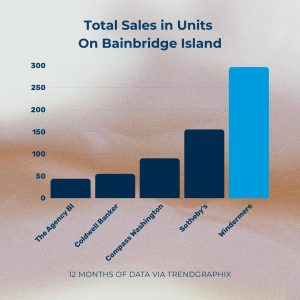
When comparing brokerages, look at market share. It speaks to a brokerage’s experience and reputation. Repeat business is also an important factor. Many of our Windermere Bainbridge Island Brokers report that about 90% of their business is repeat business or referrals. Only satisfied homebuyers and sellers refer their friends and use that real estate agent again. Building and maintaining strong relationships is at the core of the way we operate, and we’re proud that it shows. Windermere Real Estate is built on integrity and trust. For years we’ve been the #1 brokerage on Bainbridge Island in total sales. Windermere Real Estate is also the top brokerage in the Seattle area. This is not because we’re the biggest; it’s because we’re committed to offering the finest service and the highest value to our clients.
We are also known for investing in our community. Collectively, Windermere offices have raised over $59,000,000 for local nonprofits through the Windermere Foundation. Our Bainbridge office has supported over 20 local organizations in the last year. And, every time you work with a Windermere agent, you help us make a difference. That’s because a portion of every agent’s commission is donated to the Windermere Foundation. Dedicated to helping low-income and homeless families since 1989, we’re proud of our 100% participation.
Who you work with matters. Real estate involves high stakes and mistakes can be costly. So, start with a brokerage that has proven results and a great reputation. From there, you can find a highly-rated local real estate expert. Whoever you decide to work with, we wish you the best in your home-selling journey!
Illuminating Local History with the Bainbridge History Museum
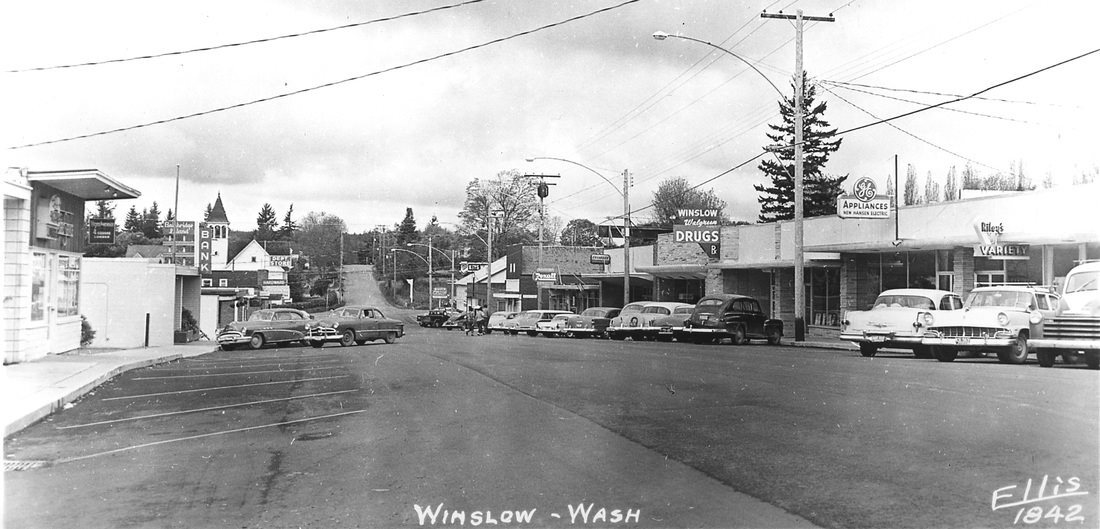
Bainbridge Island’s unique history spans all areas of the island. The Bainbridge History Museum has a history of its own, one that includes a one-room schoolhouse, which has been moved around the island many times since 1908. As proud locals, we wanted to know more. So, we consulted an expert: Lindsay Ogles with the Bainbridge History Museum (BHM). Check out our Q&A with Lindsay below to learn about her role and the fascinating ways BHM sheds light on our community’s past.

Lindsay Ogles, Director of Exhibits and Engagement
What is your role with the Bainbridge History Museum, and how long have you been with the organization?
I am the Director of Exhibits & Engagement (AKA: Curator). I’ve been with the museum for the past three years and have always wanted to work in public history. I love being able to share stories that shaped communities and the way that we live decades and even centuries later.
Can you tell us a little bit about the history of the Bainbridge History Museum?
The Bainbridge History Museum started as the Bainbridge Island Historical Society in the 1970s. We first opened a museum building at Strawberry Hill Park but then relocated to Ericksen Avenue in 2004.
When curating new exhibits or programs, what considerations are used when deciding what to highlight?
We do our best to highlight well-loved topics in new ways alongside new topics to help bring previously undiscussed history and perspectives to light. We aim to include the whole of the island and are always on the lookout for new materials and stories that can be preserved and shared about life on Bainbridge Island.
What would you consider to be the most unique part of Bainbridge history?
Bainbridge Island has so many unique aspects to our history. From sites like Yama to our industrial history in lumber mills and creosoting, we stand out amongst other historical areas in Kitsap County. Add to that our famous Marshall strawberries and we even hit the international marker for fascinating history. In fact, we sent some of our Marshall strawberries to the Queen of England in the late 1930s.
What are the best ways that community members can show support?
People can help us keep Bainbridge Island’s stories alive with a donation or by becoming a member. Our members get discounted admission to a number of our events and free admission to our monthly History Huddles. We invite everyone to come and visit the Museum. We are open daily and free to the public.
What new or exciting things are coming in 2026?
We have several fun events coming up this summer! On July 19th, join us as we Set Sail Into History on a 3-hour scenic lunch cruise around Bainbridge Island. Or, come celebrate our pickleball history August 5th – 9th as the Museum hosts the 7th Annual Bainbridge Island Founders Tournament. Also, we invite everyone to come see our newest exhibit on display through December 2026 called Dearly Departed. It covers Bainbridge Island between 1900 and 1950 through medical history. Come learn about everything from unexpected causes of death to hazardous working environments, and our island’s historic cemeteries.
Which area of the island has the most history, and why?
Every bit of Bainbridge Island is steeped in history. From major population centers and industrial sites to the rolling farmlands and military bases turned parks, Bainbridge Island has history around every turn.
Anything else you would like folks to know about Bainbridge History or the Museum?
We are officially open DAILY 10:00 AM – 4:00 PM, offering more days of history and fun every day of the week! Come see us in person and check out the museum. People can also follow along with everything we are doing by following us on Facebook and Instagram!
A big thank you to Lindsay and the BHM team for showcasing Bainbridge Island’s history. Want to learn more about our amazing community? Check out our Guide to Bainbridge. Or, learn more about different Bainbridge Island neighborhoods.
New Agent Spotlight: Crystal Hill
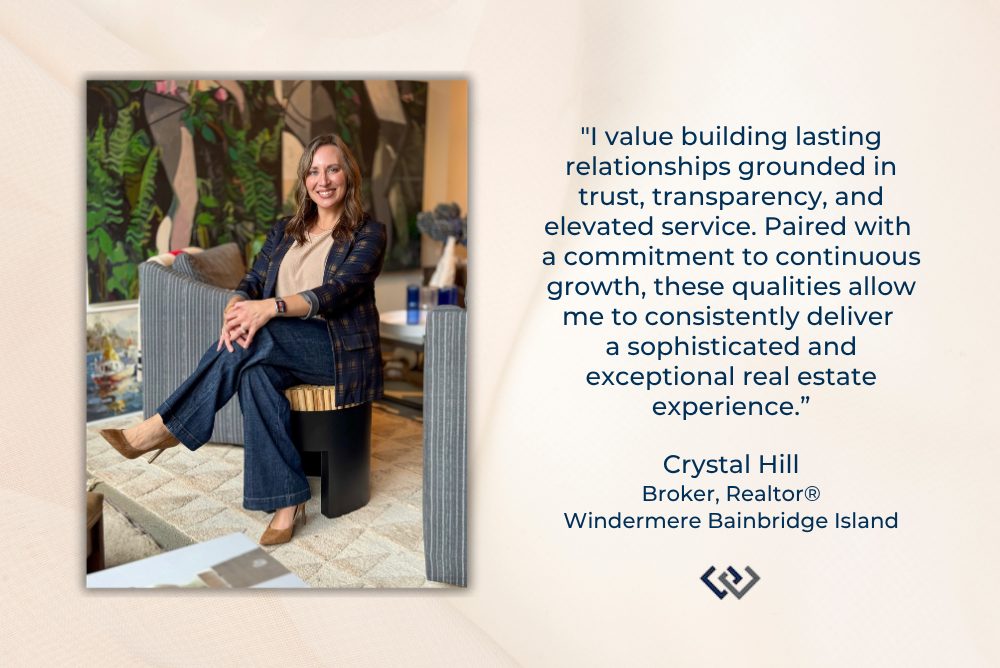
With a background in social work and a reputation as a strategic problem-solver, Crystal Hill offers homebuyers and sellers the full-service experience. We’re so glad she’s joined us here at Windermere Bainbridge Island. Crystal is a highly knowledgeable Broker/Realtor with six years in the industry. Read our Q&A below to learn about her approach to real estate, her community involvement, and more.
What drew you to real estate?
What drew me to real estate is the opportunity to make a meaningful impact in people’s lives during some of their biggest milestones. Buying or selling a home isn’t just a transaction—it’s deeply personal. I was also attracted to the combination of entrepreneurship, flexibility, and relationship-building that the industry offers. Being able to guide clients, solve problems, and help them achieve their goals while building something of my own is what really inspired me to pursue real estate.
What unique professional experiences or skills do you possess that enhance your abilities as a realtor?
Coming from a background in social work and interacting closely with attorneys and other professionals, I bring a refined blend of strategic communication, thoughtful problem-solving, and a deeply client-centered approach to my work in real estate. I pride myself on my ability to understand each client’s vision, anticipate potential challenges, and navigate even the most complex transactions with discretion and confidence. My attention to detail ensures that every aspect—from contracts to timelines and negotiations—is handled with precision and care.
I’m known for my adaptability, professionalism, and unwavering work ethic in a fast-paced market. I remain highly responsive and composed under pressure, delivering a seamless experience from start to finish. Above all, I value building lasting relationships grounded in trust, transparency, and elevated service. Paired with a commitment to continuous growth, these qualities allow me to consistently deliver a sophisticated and exceptional real estate experience.


What personality traits do you think are important in this profession?
In real estate, I believe the most essential personality traits are integrity, discretion, and a highly elevated standard of service. Clients entrust us with some of their most significant financial and personal decisions. So, it’s critical to lead with transparency, professionalism, and an unwavering commitment to their best interests.
Equally important is empathy—the ability to understand each client’s unique goals and circumstances—and adaptability, since every transaction and market condition can present new challenges. A high level of professionalism, attention to detail, and resilience also play a key role, especially in a fast-moving and sometimes unpredictable environment.
Ultimately, a successful Realtor balances confidence with warmth, offering a polished, concierge-level experience. Clients should feel not only expertly represented, but genuinely understood and cared for at every stage of the journey.
Which areas do you serve and what do you love about the area?
I serve the greater Kitsap County area, including Poulsbo and Bainbridge Island, as well as the Greater Seattle area: Queen Anne, Magnolia, Madison Park, and West Seattle. What I love most about these areas is the incredible balance they offer. You get the natural beauty of the Pacific Northwest with waterfront views, lush greenery, and charming neighborhoods. And, you still have access to the energy and opportunities of Seattle. Each neighborhood has its own unique character, but they all share a strong sense of community, making it especially meaningful to help people find a place they truly feel at home.



How long have you lived here and what brought you here?
I moved to Bainbridge Island seven years ago from West Seattle, drawn by the exceptional schools and the opportunity to give my children the same kind of relaxed, nature-filled childhood I was fortunate to experience. What I’ve come to appreciate is the strong sense of community here. It’s a place where neighbors genuinely connect. That feeling of belonging is something I value deeply.
How are you involved in the community?
Giving back to the Bainbridge Island community is incredibly important to me. I’m proud to support many of our local nonprofits, including The BARN, IslandWood, the Bainbridge School Foundation, BIMA, and Bainbridge Youth Services. I also sponsor a local Little League team, and am a member of a community garden. That has been such a fun, meaningful way to stay connected with families on the island. These organizations are a big part of what makes this community so special, and I feel fortunate to be able to contribute to the people and programs that help Bainbridge Island thrive.
What made you decide to work with Windermere Real Estate?
I chose to work with Windermere because of its strong reputation for integrity, professionalism, and deep roots in the Pacific Northwest. It was important to me to align with a company that not only delivers exceptional service, but also shares my commitment to community and giving back.
Windermere’s culture is very relationship-driven, with a focus on elevating the client experience at every step. I also value the level of collaboration and support within the company. It allows me to better serve my clients with insight, resources, and a truly tailored approach. It felt like a natural fit both professionally and personally.
To learn more about Crystal Hill, check out her website, and follow her on Facebook and Instagram.
Native Plants: Gardening Q&A with Bay Hay and Feed

Bay Hay and Feed is a wonderful, old fashioned farm store on Bainbridge Island. You’ll find everything from fresh eggs to gifts alongside a large plant nursery and feed store. Created by Howard Block and Ce-Ann Parker in 1979, Bay Hay and Feed has become a neighborhood staple. It is also known for the iconic Bay Hay Shirts. Located in a 1912 building, Bay Hay and Feed changed ownership in 2022 when longtime manager Els Heijne and her family took over. Sustainability is a big part of the Bay Hay story, and part of that is embracing native plants.
Read on for some expert tips from Els on how to incorporate native plant species into your garden.
What are the benefits of using native plants in landscaping?
You know your plants will thrive, if planted in the correct environment. Most natives need shade from big trees. Once established, those plants are great for the local animals and insects.
What is a small change gardeners can make in a larger space?
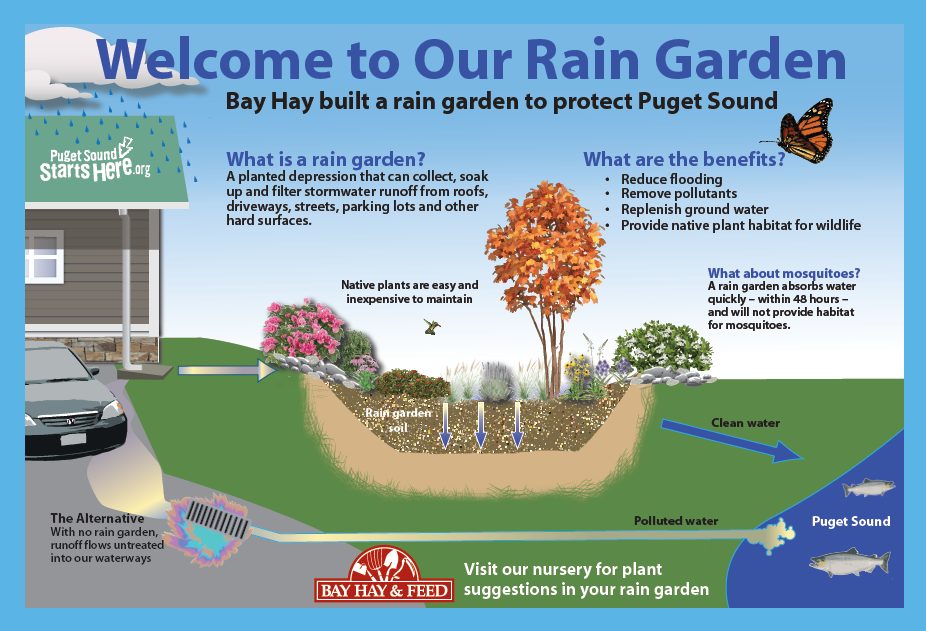
Plant trees! Plus, create a rain garden with the water run off from your roof. It’s important that we catch the water so it can go back into the earth rather than into Puget Sound. You can plant native plants in and around the rain garden, depending how much shade there is. If not, you can use blueberries, red and yellow twig dogwood and others that like wet feet.
What should folks focus on in springtime to set their yard/garden up for success during the rest of the year?
Mulch! That way, you might not have to water in the summer. Non-native plants do much better if they get fertilizer early in the spring. But make sure you use organic fertilizer.
What are some trends you are seeing with landscaping/gardening projects?
Pollinator plants are big. [You can learn more about supporting pollinators here.]
We recently heard about SEATAC’s new native species requirements. What can smaller businesses do to make an impact?
If it is all concrete around you and no shade, it will be hard to plant a native garden. Instead, create a rain garden or two to catch all that water that runs off your business!
Do you have any other tips or suggestions?
Don’t tear out a beautiful garden to install a native garden. Such a waste! If you have a lot of shade it would be great to plant natives but you can also add beautiful non-native shade plants in between, so your garden has more interest. Add pollinator plants to help the bees, butterflies and other insects and don’t clean up too much in your garden so beneficial insects can thrive.
Use organic fertilizer and don’t use bad chemicals to take care of an insect problem, weeds or fungus. You kill a lot of beneficial insects with that and poison the ground. There are a lot of products on the market now that are not bad for the environment.
A big thank you to Els and the team at Bay Hay and Feed! If you’d like to connect with them, you can visit them here on Bainbridge Island, visit their website, follow them on Facebook, or on Instagram. And, for more green living inspiration, check out our articles on eco-friendly home improvements and gardening benefits.
Does a Buyer-Agency Agreement Matter?

If you’re new to the home-buying process or haven’t bought a home here in Washington State, you may be wondering what a buyer-agency agreement is and whether it matters. A newer requirement, this contract actually does matter for buyers. Read on to find out why buyers must sign a Buyer-Agency Agreement, what it’s designed to do, and why it’s an important piece of the real estate puzzle.
Buyer-Agency Agreement: What It Is
When you find a real estate agent that you want to work with, you’ll sign a Buyer-Agency Agreement. It may also be referred to as a buyer representation agreement or a buyer-broker agreement. This written contract is between a prospective home buyer and a real estate agent. It outlines the services your agent will provide, their compensation structure, and the terms under which they will provide their services.
Curious about this agreement’s background? Well, in mid-2024, the National Association of REALTORS® (NAR) began requiring agents to have clients sign a Buyer-Agency Agreement before showing homes to clients. This change resulted from a nationwide settlement. It provides greater transparency and accountability since all agent-buyer relationships are clearly defined in the contract. This requirement is not new in some real estate markets, and isn’t here in Washington state. But if this is new to you as a buyer, you’re not alone. It’s important to make a well-informed decision.
Is a Buyer-Broker Agreement Good for Buyers?
A buyer-broker agreement (AKA a Buyer-Agency Agreement) helps build trust, establish and manage expectations, and create a clear timeline. You’ll definitely want to read any real estate agreement in full before signing it, and consult a lawyer for any legal advice you may need.
More specifically, an exclusive buyer agency agreement means you must work only with that real estate agent in that area during the term stated in your contract. By signing this agreement, you’ll have clarity around compensation. Also, you’ll know exactly what your agent will do for you. This includes helping you navigate listings, set up showings, compare neighborhoods, provide you with market research, and guide you through offers, inspections, and the closing process.
Common Concerns & How to Address Them
If you haven’t signed this type of agreement before, you may be concerned about a loss of flexibility. Sometimes we hear people ask, “What if I want to work with another agent? Will I be stuck with the wrong agent?” Not to fear. As a buyer, you can negotiate the term length, scope, and cancellation language to feel more comfortable. As the National Association of Realtors (NAR) states, “Compensation between you and your real estate professional is negotiable and not set by law. In the written agreement, the compensation must be clearly defined (e.g., $0, X flat fee, X percent, X hourly rate)—and not open-ended or a range. Only sign an agreement that reflects what you have agreed to with your real estate professional.”
Another concern some buyers have is about the timing of signing this agreement. If you’re serious about buying a home in Washington State, or more specifically, here on Bainbridge Island, it’s best to sign within a defined time frame to ensure committed representation. If you’re casually browsing or unsure about an agent, consider an initial consultation or a very short-term agreement first.
If you have any additional questions, please feel free to reach out to one of our experienced real estate agents here at Windermere Bainbridge. If you’re eager to start looking at homes for sale on the island, check out our article on what to do before browsing listings on Bainbridge Island, and read this piece that debunks real estate myths.
Happy house hunting!
New & Relocated Businesses to Check out on Bainbridge
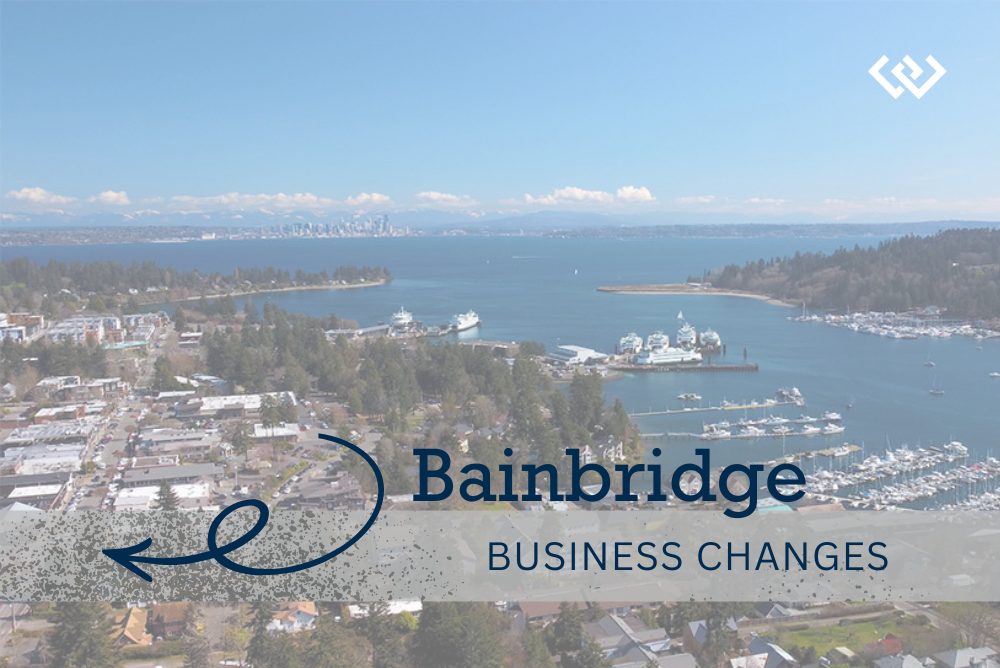
If you get the feeling that new businesses are always popping up on Bainbridge Island, you’re not wrong. Over the last few months, some businesses have moved to new locations, and others have been reimagined. Also, we’re excited about the businesses opening soon. We love to support local shops and restaurants, so of course, we’re excited to share these updates.
Rockin’ Ruby’s Records
Rockin’ Ruby’s has been in Winslow for almost a year, but recently moved locations. Now it’s right next to Bainbridge Apothecary and Tea. You can sip on a Pegasus coffee beverage or Italian soda while you peruse records for sale. This new space will continue to expand its offerings, eventually including beer and wine. Check their website or follow them on Instagram for special events, listening parties, and live music.
Hours: Saturdays & Sundays, 11:00 AM – 6:00 PM | Mondays, Thursdays, Fridays, 12:00 – 6:00 PM | Closed Tuesdays & Wednesdays
New Location: 440 Winslow Way E. Bainbridge Island
Kingfisher
A new addition to the Hitchcock Restaurant Group, Kingfisher is part supper club, part raw bar. After closing Seabird in the fall of 2025, this new concept was born. Self-described as “a multi-use space that operates as a boutique market, a cozy restaurant and wine bar, and the home of our most ambitious culinary dreams.” This is a place that you will want to visit for happy hour or a special evening out. The current iteration of the Sunday evening supper club is Parisian-inspired.
Hours: Wednesdays – Saturdays, 4:00 PM – 8:00 PM | Happy Hour 4:00 PM – 5:00 PM | Supperclub (Select) Sundays
Location: 133 Winslow Way E. Suite 100, Bainbridge Island
2 Businesses That Teamed Up: Dana’s & Wilder Grace
These two Bainbridge Island favorites recently teamed up and moved into a new space. You can now find fashion, gifts, and home goods under one roof, in the Winslow Grove building. Dana’s has been on Bainbridge since 1977, selling gifts and PNW souvenirs and highlighting local vendors. Wilder Grace is known for their seasonal fashion and artisan goods. We love the funny ferry cards by local artist Jen Colburn.
Hours: Mondays – Sundays, 10:00 AM – 6:00 PM
New Location: 400 Winslow Way E, Suite 102, Bainbridge Island
Bainbridge Play Cafe
Coming in April, the Bainbridge Play Cafe is a Scandinavian-inspired play and gathering space. Their website says the space will feature “social gatherings for moms, morning groups for dads, classes for kids, courses for new parents, free weekly storytimes, and everything in between.” We can’t wait to see the space when they open. Owner Amanda Aude was in the 2025 Matchstick Lab Micro Business Accelerator program, which helped bring the concept to life. Follow their Instagram to stay up to date on their grand opening.
Hours: TBA
Location: 360 Tormey Ln. NE Suite 194, Bainbridge Island
Looking for more local inspiration? Make sure to follow Windermere Sound Living, or check out our free Guide to Bainbridge and our Events Guide.
Does Staging Really Help Sell Your Home? Here’s the Data
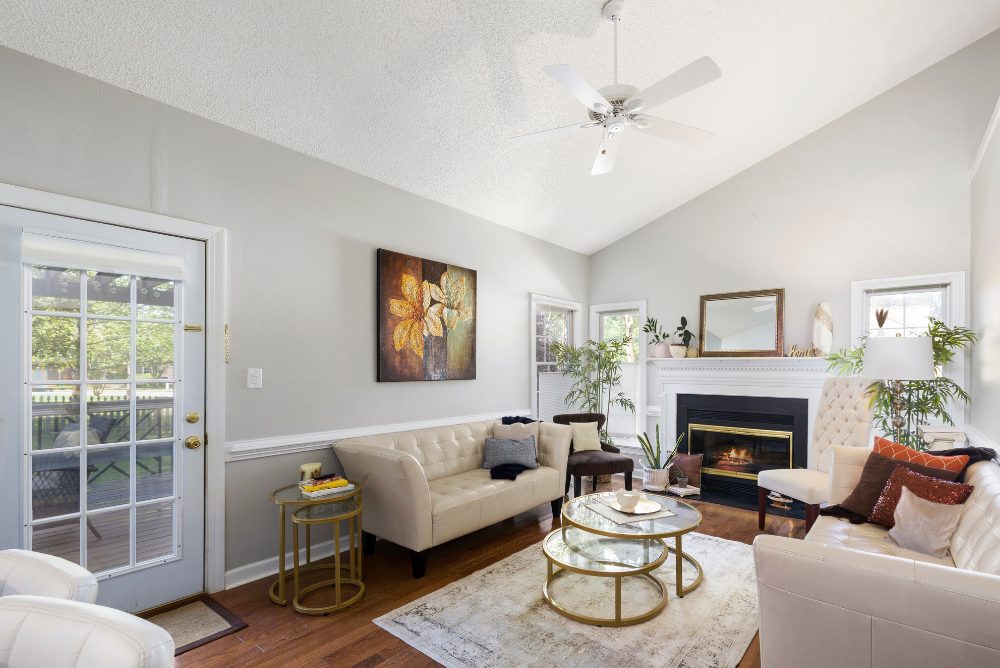
When it comes to selling your home, first impressions mean a great deal. As you prepare your home for market, you may wonder whether staging your home is really worth the cost. Here are some data-driven insights, best practices, trends, and advantageous approaches to the home-selling process.
Why Home Staging Matters
Staged homes tend to sell faster and often for more money than those that aren’t staged.
Here are some key home staging benefits:
-
Increased buyer engagement online and in person.
-
Higher perceived value and stronger offers.
-
Reduced time on the market since staged listings can motivate buyers to make decisions more quickly.
Home Staging Statistics You Should Know
Recent home staging statistics show clear results:
-
Nearly 50% of sellers’ agents report staging reduces the time on market.
-
83% of home buyers’ real estate agents said “staging a home made it easier for a buyer to envision the property as their future home.”
- The most commonly staged rooms by home sellers’ real estate agents were the living room (91%), primary bedroom (83%), dining room (69%), and the kitchen (68%).
Staging is a strategic part of marketing your home. It can influence buyer behavior. Important rooms in the home are carefully prepared so that they create a strong first impression with buyers, both online and in person.
Best Home Staging Practices
While staging can seem overwhelming, a few smart moves go a long way.
1. Declutter and Depersonalize
While you may have already prepared to deep-clean your home to get it ready for market, it’s crucial to declutter and depersonalize it as well. You want buyers to be able to easily imagine living there. Packing your mementos away, donating unwanted or rarely used items, and getting organized in advance can streamline the preparation process. Minimal décor will help emphasize each room’s size and potential. It’s also a good idea to pare down furniture. You want every area to feel as spacious as possible. If you’re moving into a smaller home, check out these downsizing tips.
2. Focus on Key Areas
Prioritize the areas that matter most, such as your home’s exterior, living areas, kitchen, and primary bedrooms. These impact home buyers’ impressions and can create an emotional connection. Curb appeal can make quite a difference since it’s the first thing buyers see. So, be sure to repaint or pressure-wash your siding, clean your windows, and gutters. Enhancing your property’s landscaping and adding flower pots, outdoor furniture, and/or a fire pit can make it more inviting.
When it comes to the interior, make sure you get rid of any unwanted smells, remove heavy drapery to let as much light in as possible, and consider updating lighting fixtures and hardware to give each space a fresh feel.
3. Use High Quality Photography
The majority of buyers start their home search online. Staged rooms tend to photograph better and attract more online views, showings, and, ultimately, offers. Having an excellent local agent who works with top-tier photographers can make a huge difference. 3D virtual tours and videography, including aerial footage, can also be highly advantageous for your property, especially if the home is well-prepared and staged.
Real Estate Staging Trends
Staging has evolved alongside interior design and real estate trends. Buyers increasingly want a home that supports work, wellness, and entertainment. Think bright home offices, spa-like bathrooms, spacious living rooms, and welcoming outdoor dining areas. With this in mind, staging often includes carefully selected pieces that feel aspirational without being too specific. You don’t want to alienate buyers or have them focus on the decor more than the home itself. Additionally, high-quality virtual tours are becoming the standard, so the more obvious each room’s best qualities are at first glance, the better.
Staging a Waterfront Home
Waterfront homes have their own staging considerations. These properties often offer stunning views, lots of natural light, and potential for outdoor living. With those features in mind, furniture should be arranged to emphasize windows and water views. Patios, porches, decks, and docks should be presented as extensions of the living space. You’ll also want to make sure that your outdoor furniture suggests relaxation and hints at the lifestyle provided with this home. While you may have many elements that create fun themed decor, it’s best to take a minimalist approach. You want to enhance the openness of the waterfront property by focusing on subtle accents such as soft linens, textured natural fibers, sheer curtains, and light colors.
Financial Assistance to Maximize Your Home’s Appeal
Staging is an upfront investment, but not all sellers can or want to shoulder that cost. That’s where the Windermere Ready program comes in. It offers up to $100,000 in financial assistance to make strategic improvements that boost buyer interest and potentially help you sell for more. Learn more about this advantageous program or talk to your Windermere Bainbridge Island Broker to get started.
