

 Facebook
 X
X
 Pinterest
 Copy Link
New Agent Spotlight: Crystal Hill
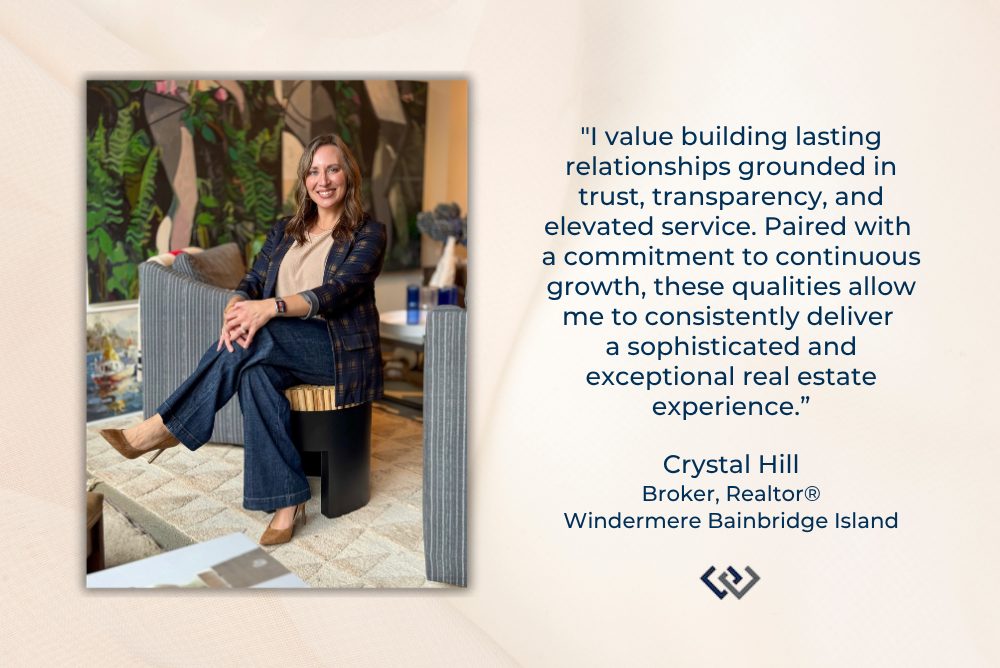
With a background in social work and a reputation as a strategic problem-solver, Crystal Hill offers homebuyers and sellers the full-service experience. We’re so glad she’s joined us here at Windermere Bainbridge Island. Crystal is a highly knowledgeable Broker/Realtor with six years in the industry. Read our Q&A below to learn about her approach to real estate, her community involvement, and more.
What drew you to real estate?
What drew me to real estate is the opportunity to make a meaningful impact in people’s lives during some of their biggest milestones. Buying or selling a home isn’t just a transaction—it’s deeply personal. I was also attracted to the combination of entrepreneurship, flexibility, and relationship-building that the industry offers. Being able to guide clients, solve problems, and help them achieve their goals while building something of my own is what really inspired me to pursue real estate.
What unique professional experiences or skills do you possess that enhance your abilities as a realtor?
Coming from a background in social work and interacting closely with attorneys and other professionals, I bring a refined blend of strategic communication, thoughtful problem-solving, and a deeply client-centered approach to my work in real estate. I pride myself on my ability to understand each client’s vision, anticipate potential challenges, and navigate even the most complex transactions with discretion and confidence. My attention to detail ensures that every aspect—from contracts to timelines and negotiations—is handled with precision and care.
I’m known for my adaptability, professionalism, and unwavering work ethic in a fast-paced market. I remain highly responsive and composed under pressure, delivering a seamless experience from start to finish. Above all, I value building lasting relationships grounded in trust, transparency, and elevated service. Paired with a commitment to continuous growth, these qualities allow me to consistently deliver a sophisticated and exceptional real estate experience.



What personality traits do you think are important in this profession?
In real estate, I believe the most essential personality traits are integrity, discretion, and a highly elevated standard of service. Clients entrust us with some of their most significant financial and personal decisions. So, it’s critical to lead with transparency, professionalism, and an unwavering commitment to their best interests.
Equally important is empathy—the ability to understand each client’s unique goals and circumstances—and adaptability, since every transaction and market condition can present new challenges. A high level of professionalism, attention to detail, and resilience also play a key role, especially in a fast-moving and sometimes unpredictable environment.
Ultimately, a successful Realtor balances confidence with warmth, offering a polished, concierge-level experience. Clients should feel not only expertly represented, but genuinely understood and cared for at every stage of the journey.
Which areas do you serve and what do you love about the area?
I serve the greater Kitsap County area, including Poulsbo and Bainbridge Island, as well as the Greater Seattle area: Queen Anne, Magnolia, Madison Park, and West Seattle. What I love most about these areas is the incredible balance they offer. You get the natural beauty of the Pacific Northwest with waterfront views, lush greenery, and charming neighborhoods. And, you still have access to the energy and opportunities of Seattle. Each neighborhood has its own unique character, but they all share a strong sense of community, making it especially meaningful to help people find a place they truly feel at home.



How long have you lived here and what brought you here?
I moved to Bainbridge Island seven years ago from West Seattle, drawn by the exceptional schools and the opportunity to give my children the same kind of relaxed, nature-filled childhood I was fortunate to experience. What I’ve come to appreciate is the strong sense of community here. It’s a place where neighbors genuinely connect. That feeling of belonging is something I value deeply.
How are you involved in the community?
Giving back to the Bainbridge Island community is incredibly important to me. I’m proud to support many of our local nonprofits, including The BARN, IslandWood, the Bainbridge School Foundation, BIMA, and Bainbridge Youth Services. I also sponsor a local Little League team, and am a member of a community garden. That has been such a fun, meaningful way to stay connected with families on the island. These organizations are a big part of what makes this community so special, and I feel fortunate to be able to contribute to the people and programs that help Bainbridge Island thrive.
What made you decide to work with Windermere Real Estate?
I chose to work with Windermere because of its strong reputation for integrity, professionalism, and deep roots in the Pacific Northwest. It was important to me to align with a company that not only delivers exceptional service, but also shares my commitment to community and giving back.
Windermere’s culture is very relationship-driven, with a focus on elevating the client experience at every step. I also value the level of collaboration and support within the company. It allows me to better serve my clients with insight, resources, and a truly tailored approach. It felt like a natural fit both professionally and personally.
To learn more about Crystal Hill, check out her website, and follow her on Facebook and Instagram.
Does a Buyer-Agency Agreement Matter?

If you’re new to the home-buying process or haven’t bought a home here in Washington State, you may be wondering what a buyer-agency agreement is and whether it matters. A newer requirement, this contract actually does matter for buyers. Read on to find out why buyers must sign a Buyer-Agency Agreement, what it’s designed to do, and why it’s an important piece of the real estate puzzle.
Buyer-Agency Agreement: What It Is
When you find a real estate agent that you want to work with, you’ll sign a Buyer-Agency Agreement. It may also be referred to as a buyer representation agreement or a buyer-broker agreement. This written contract is between a prospective home buyer and a real estate agent. It outlines the services your agent will provide, their compensation structure, and the terms under which they will provide their services.
Curious about this agreement’s background? Well, in mid-2024, the National Association of REALTORS® (NAR) began requiring agents to have clients sign a Buyer-Agency Agreement before showing homes to clients. This change resulted from a nationwide settlement. It provides greater transparency and accountability since all agent-buyer relationships are clearly defined in the contract. This requirement is not new in some real estate markets, and isn’t here in Washington state. But if this is new to you as a buyer, you’re not alone. It’s important to make a well-informed decision.
Is a Buyer-Broker Agreement Good for Buyers?
A buyer-broker agreement (AKA a Buyer-Agency Agreement) helps build trust, establish and manage expectations, and create a clear timeline. You’ll definitely want to read any real estate agreement in full before signing it, and consult a lawyer for any legal advice you may need.
More specifically, an exclusive buyer agency agreement means you must work only with that real estate agent in that area during the term stated in your contract. By signing this agreement, you’ll have clarity around compensation. Also, you’ll know exactly what your agent will do for you. This includes helping you navigate listings, set up showings, compare neighborhoods, provide you with market research, and guide you through offers, inspections, and the closing process.
Common Concerns & How to Address Them
If you haven’t signed this type of agreement before, you may be concerned about a loss of flexibility. Sometimes we hear people ask, “What if I want to work with another agent? Will I be stuck with the wrong agent?” Not to fear. As a buyer, you can negotiate the term length, scope, and cancellation language to feel more comfortable. As the National Association of Realtors (NAR) states, “Compensation between you and your real estate professional is negotiable and not set by law. In the written agreement, the compensation must be clearly defined (e.g., $0, X flat fee, X percent, X hourly rate)—and not open-ended or a range. Only sign an agreement that reflects what you have agreed to with your real estate professional.”
Another concern some buyers have is about the timing of signing this agreement. If you’re serious about buying a home in Washington State, or more specifically, here on Bainbridge Island, it’s best to sign within a defined time frame to ensure committed representation. If you’re casually browsing or unsure about an agent, consider an initial consultation or a very short-term agreement first.
If you have any additional questions, please feel free to reach out to one of our experienced real estate agents here at Windermere Bainbridge. If you’re eager to start looking at homes for sale on the island, check out our article on what to do before browsing listings on Bainbridge Island, and read this piece that debunks real estate myths.
Happy house hunting!
What to Know When Buying a New Construction Home
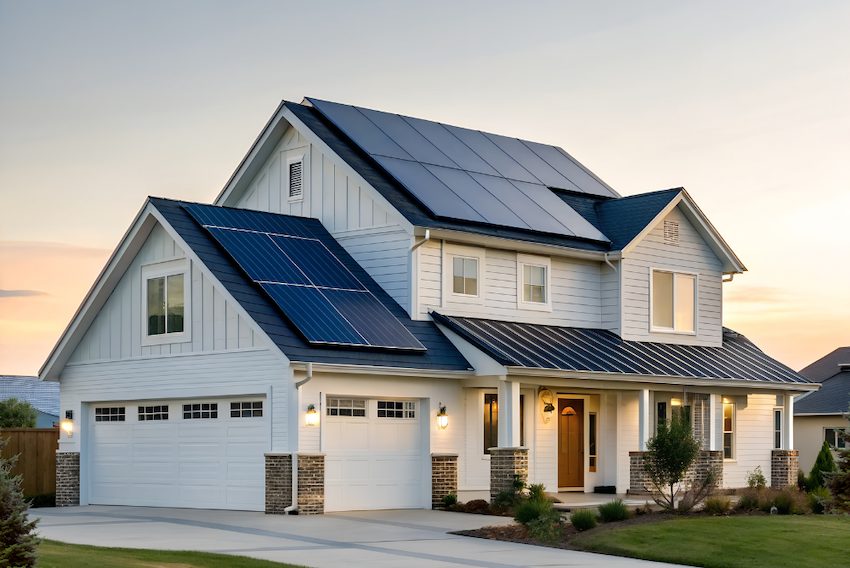
New homes come equipped with great appliances and modern features. But a brand new home is not without flaws. If you want to buy a new construction home, do your research first. This will ensure you invest with your eyes wide open. Like any property, a new construction home can come with costly pitfalls if you make assumptions along the way. Here’s what to know and what to avoid.
Every builder is different
Before purchasing a new construction home, research the builder. Local builders should be listed on the Washington State Department of Labor and Industries website. If a builder is not listed, call that department. You want to make sure the builder is licensed to work in our state. Additionally, you’ll want to avoid builders with infractions, such as safety citations or pending lawsuits. Also, it can be helpful to read clients’ reviews online. If possible, talk to people who have bought a house built by a certain builder. See how it has held up over time.
Local Brokers and home inspectors are great resources, too. They can provide other valuable builder and neighborhood details. In small communities like ours here on Bainbridge Island, working with locals is incredibly advantageous. A well-connected real estate agent can provide the resources and insider information you need. They know the history of different areas, builders’ reputations, and the nuances of certain neighborhoods.
Timelines can change
Construction timelines can vary widely, especially given a home’s size, location, and features. Therefore, you’ll want to establish a deadline from the beginning, along with project milestones. By doing so, you’ll avoid miscommunication and have a clear goal to work toward.
Unfortunately, new construction homes often experience delays. From supply chain disruptions to adverse weather, there can be twists and turns along the way. And, keep in mind that if you request construction changes midway, this will also delay the timeline. A local, experienced, and transparent broker can be quite an asset in this situation. Lastly, it’s essential to read the fine print in any contracts. You’ll want to make sure the sections on delays are reasonable and that protections for you are included.
Know what’s included and what’s not
Some new-construction buyers believe they can completely customize a new home, including the cabinetry, doors, and layout. This isn’t necessarily the case. Be sure to ask potential builder partners what they specifically provide for customization. While many builders offer some level of personalization, that’s very different from completely customizing a new home. Talk openly and frequently with your builder. Ask your customization and design questions right away to avoid costly mistakes. Often, potential upgrades include hardwood or tile flooring and custom countertops. If you do decide to upgrade, those changes and costs are added to the contract to avoid misunderstandings.
Hire an independent home inspector
Even though these homes are brand new, it’s still worth getting a home inspection. You’re essentially the first person to test the home out to see if there are any problems with components like the HVAC and the roof. Hiring an independent home inspector will help you identify any needed repairs. Furthermore, an independent home inspector’s report will help you start a dialogue with the builder about addressing any issues before you move in. According to Realtor.com, “if you’re buying a home under construction, you should hire an inspector twice. The first time is so they can look over the home before the walls are closed, and inspect framing and systems installation. The second should be after the home is complete, so they can inspect everything else.”
Understand your home warranty
New-construction builds often come with a home warranty—a promise to fix anything that breaks within a set period of time. However, many homebuyers don’t use it because they don’t know what it covers or for how long. Warranties can safeguard against poor construction and/or any unanticipated defects. It’s vital that you fully understand what the builder warranty covers.
Buying a new construction home involves many steps and stages, so be sure to ask any questions you have throughout the process.
Have a question about new home construction that we didn’t answer? Please contact one of our highly-rated, local agents. They’d be happy to assist you.
Buy Before You Sell: Bridge Loan FAQs

If you’re a homeowner thinking of selling so you can buy a new home, you may want to consider using a bridge loan. Curious about the positives and negatives of this financing option? Read on to find out. We’ve answered your frequently asked questions below.
What is a bridge loan?
As a homebuyer, a bridge loan allows you to borrow a portion of the equity in the home you already own as a down payment on a new house. Similar to a home equity loan, bridge loans are secured with your current home as collateral. They typically have shorter terms and last up to one year. Borrowers often combine the bridge loan with their existing mortgage, borrowing the difference between what they owe on their current residence and a percentage of the home’s value.
What are the pros?
The bridge loan provides immediate cash flow, expediting the transition from one house to the next. Compared to a standard mortgage, the application and approval process for a bridge loan is typically streamlined. It enables you to make an offer on a new property without a home sale contingency. This can be particularly advantageous because sellers often prefer offers without contingencies, making your bid stand out among the competition.
What are the cons?
Bridge loans often come with higher interest rates vs. traditional mortgages. If your home doesn’t sell within the designated time frame, you might find yourself responsible for paying the mortgage on your current home, the mortgage on your new home, and the bridge loan. To qualify for a bridge loan, you’ll need a low debt-to-income ratio, a strong credit score, and significant equity in your current home. For this reason, it may be challenging for some homeowners to qualify.
What is the Windermere Bridge Loan?
Windermere offers an exclusive bridge loan program for clients. Our local real estate agent’s expert guidance, coupled with our program, can give you a stronger negotiating position. You don’t want to miss out on your ideal home because you have to wait for your current home to sell. When assessing qualifications for our bridge loan, Windermere looks at what you owe on your property plus the bridge loan. These two loans combined cannot be more than 75% of your current property’s value. This helps determine the amount of the qualifying bridge loan. If you’re worried about expediency, the approval process for a Windermere Bridge Loan takes just a few days.
Our Windermere agents have helped clients achieve their real estate goals, thanks in part to this program. As a Windermere Bridge Loan buyer, you have no monthly payments for 6 months or until you sell the collateral property. It is a seamless process and no appraisal is involved on the property being purchased.
What are the alternatives?
Home equity loans, home equity lines of credit (HELOCs), and personal loans are all alternatives to bridge loans. They offer various ways to finance your new home purchase. Before you make your decision, carefully compare the costs and terms associated with each financing option.
Additional information
To learn more, check out our guide to buying a home and our guide to selling a home. If your current home needs repairs or upgrades before putting it on the market, consider the Windermere Ready program. Windermere Ready provides an upfront investment of up to $100,000 to help your home sell for more. Also, here are some FAQs about the home-selling process. As always, if you have any questions, please reach out to one of our highly rated Windermere Bainbridge Island Brokers.
Investment Properties, Fixer-Upper vs. Turnkey, and More

Every home buyer has a unique situation and specific goals that influence their decision-making process. From investment properties to turnkey homes, we’ve compiled a list of some frequently asked questions. Below you’ll find helpful considerations and resources to assist you on your real estate journey.
What should I look for when considering investment properties?
When searching for an investment property, several key considerations should be taken into account. Think about the property’s proximity to local amenities, what the neighborhood and larger community offer, and the potential development of that area. If you’re specifically looking at homes for sale on Bainbridge Island, you’ll also want to think about its proximity to the ferry for commuters. Furthermore, you’ll want to examine nearby rentals and vacancies, looking at the current rental market as a whole. Major employers in the area and average rental prices are also factors that could impact the return on your investment. After you purchase an investment property, ensure it is properly maintained. If you don’t want the stress that can come with being a landlord, check out Windermere Property Management. It’s a great local option here in Kitsap County. Our colleagues there work hard to exceed their clients’ expectations. Alternatively, if you’re thinking you’d like to hold onto this new property as a vacation home instead of renting it out, Bainbridge Ready offers estate care, concierge service, and complete home management.
What are the pros and cons of a fixer-upper?
Fixer-upper homes are all about the potential they offer to homebuyers. From repairs to renovations, fixer-upper homes can vary widely. For example, a fixer-upper may require new flooring and siding, whereas another property may need roof repairs, cosmetic fixes, and replacement of some appliances. If you are looking for a smaller-scale renovation, look for homes for sale that require cosmetic projects like new interior and/or exterior paint, fresh carpeting, and basic landscaping maintenance. More expensive projects include re-roofing, replacing HVAC systems, and full-scale room remodels. While fixer-uppers can be exciting for those who are handy or know a great, local team of contractors, projects may run long and over budget, supply costs might rise, and the market might change by the time the house is ready to move into or rent. With these types of scenarios in mind, it’s best to talk to your homeowner’s insurance company in advance to understand what’s covered. While fixer-upper properties have a lot of potential, it’s up to you to turn that dream into a reality. You want to ensure the return on your investment will be fully realized.
What are the pros and cons of a turnkey home?
Turnkey homes are also called move-in ready because they’re ready the day you receive the keys. If you’re purchasing a property to rent out for passive income, then a turnkey home can be advantageous. It’s ready for you to rent right away. A turnkey property may be a new construction home or a recently remodeled listing that is in excellent condition. You don’t have to worry about renovations or repairs. This can be appealing to busy families or people looking to downsize. However, there’s typically more competition for turnkey homes vs. fixer-uppers. Homes that are move-in ready also tend to be priced higher.
What should I look for when buying land?
While Bainbridge Island is an incredible place to live, buying land here requires thorough research. A parcel of land may be zoned for residential or commercial use or both. Find out if the land you’re looking to purchase is zoned for your specific interests and needs. Additionally, think seriously about how the land you’re looking to buy could be impacted by a natural disaster. From wildfires to floods, earthquakes to mudslides, take every possibility seriously. To learn more, read our article detailing what to consider when buying land to build a house.
Utilize a local real estate expert
While different types of properties come with different considerations, a local real estate expert will benefit you in any of these situations in many ways. Their insider knowledge of the local real estate market will help you make well-informed decisions and avoid making any costly mistakes. A great agent will also have a network of excellent local lenders, home inspectors, repair workers, and more. Contact one of our highly-rated agents to get started.
Managing Expectations When Buying a Home

Buying a home is an exciting process, but there are many steps involved. The timeline can vary greatly based on your situation, needs, wants, and goals. We’ve compiled some tips below to help you manage your expectations, which will reduce stress and result in a smoother, more enjoyable process.
Create a Focused Approach
As soon as you start seriously considering the prospect of purchasing a home, make a list that clearly details your needs, wants, and nice-to-haves. Home buyers, especially first-time home buyers, will often talk about a few specific things like a minimum of three bedrooms, a fenced yard, a big kitchen, or their ideal work commute. However, those few details aren’t enough to paint a clear picture. It also won’t filter out that many homes for sale online, and in this process, specificity is your friend.
To create a focused approach, try listing all of the things you’d love if you could wave a magic wand and have this property right now. If you’re doing this with a partner, create separate lists without talking and then come together to share. Also, when collaborating, it can help to do this with sticky notes so that you can put them up on a wall and compare, compile, and categorize needs or deal-breakers, wants, and nice-t0-haves. Get as clear as you can by asking yourself questions like these:
- What is the minimum square footage you need?
- How many bedrooms and bathrooms are necessary?
- Which type of home suits you best?
- If you’re looking at a waterfront home, do you prefer or require a low bank or high bank?
- If you’re buying land to build a home, what is your minimum lot size or acreage?
- Is it really important to you to be within walking distance of a downtown area, specific school, and/or nature?
- What driving distance is a deal-breaker for your work commute?
- What characteristics do you look for in a neighborhood? If you’re looking on Bainbridge Island, which neighborhood will suit your lifestyle best?
- How much are you willing to go over the asking price if a multiple-offer situation arises?
- If you’re downsizing, will this be a home where you can age in place?
- If you’re open to a home that needs some repairing or remodeling, what is your ballpark budget to set aside for that?
- What is your ideal timeline and what is a timeline that you can make work?
(Check out this article if you need to buy and sell simultaneously.)
Learn as Much as You Can Beforehand
It’s easy to look at houses online, but what will really help you is to learn as much as you can before you tour homes. Your Realtor should have extensive knowledge of the local real estate market. Working with a local agent can benefit you in many ways. Not only will they know the latest about your specific market, but they can also tell you about neighborhoods that may suit you best, which schools are known for what, and the amenities that are near homes you’re eyeing. Highly rated local agents also have strong ties to the community, so they can serve as a valuable resource long after closing. They will answer your questions, lay out a general timeline, and guide you through the process. The more you understand the complexities of the market and the home-buying process, the more you’ll know what to expect.
Choose Your Agent Carefully
Choosing your real estate agent is a very important decision. With a highly knowledgeable local agent, you’ll be able to better understand what to look for and what to avoid. You’ll be able to turn to someone who can discuss market trends and provide local insider information. Your agent should be a great listener, a skilled problem-solver, and a strong negotiator. And, if you’re buying here in WA, be sure to watch the video below so you’re aware of our real estate law changes.
New Agent Spotlight: Ashley Stroup
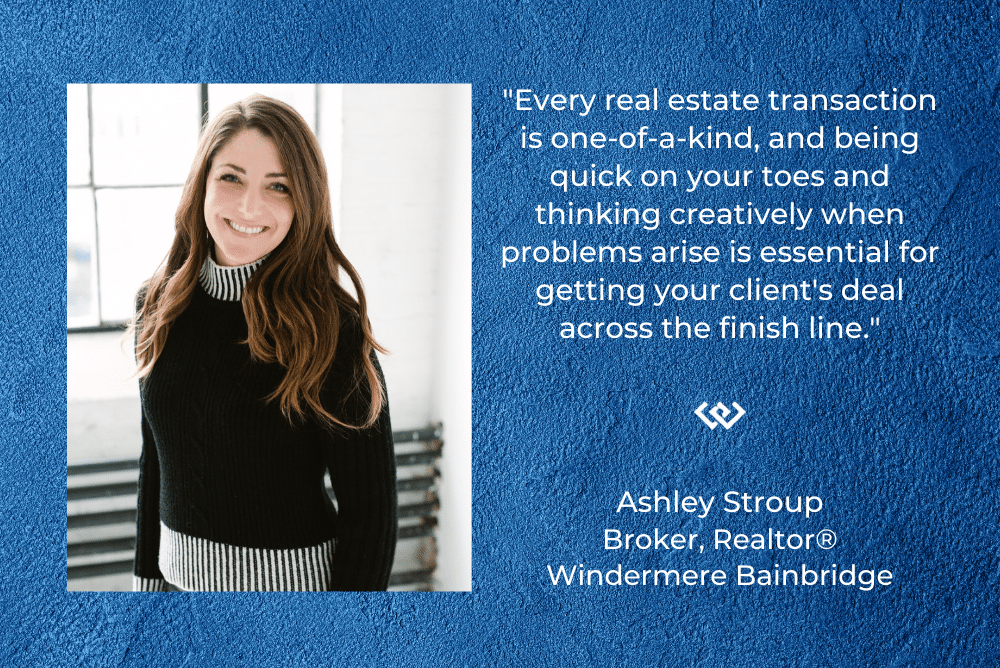
When buying or selling a home, having an agent who’s an enthusiastic, knowledgeable problem-solver can be so beneficial. Meet Windermere Bainbridge Island Broker Ashley Stroup. Ashley recently joined our team, and we’re grateful for her vibrant energy and expertise. Read our Q&A below to learn about her background, community involvement, and more.
What drew you to real estate?
I have had so many people over the years tell me I should be in real estate with my love for homes, design, and sales. I think I was intimidated, honestly! But in 2019, while interviewing agents to sell my own personal home, I was recruited to work alongside a top agent in a design/home renovation role for up-and-coming listings at the firm. I found it to be the perfect mix, utilizing my design eye, connections with contractors, and love of homes. From there, I started interacting more with clients and realized a natural connection that felt very rewarding, and I haven’t looked back!
What unique professional skills do you possess that enhance your abilities as a Realtor?
Having worked in commercial design and renovation, I have a unique ability to help clients bring their property to market with just the right updates for the biggest return on their investment. Additionally, I enjoy helping my buying clients envision possibilities for their dreams for a property they may be considering.
What personality traits do you think are important in this profession?
Creativity, compassion, and determination. Every real estate transaction is one-of-a-kind, and being quick on your toes and thinking creatively when problems arise is essential for getting your client’s deal across the finish line. Secondly, I often feel like a therapist – I think we all do! Buying and selling a family home is often the biggest emotional transaction of people’s lives, and compassion is key. Lastly, determination. Rarely does any client get to the finish line without setbacks and unforeseen obstacles along the way. I try to limit as much stress as possible for my clients, and that requires determination on my part to show up and utilize my experience to meet deadlines.
Which areas do you serve, and what do you love about the area?
I started my real estate career while living on top of Queen Anne Hill in Seattle. I specialized in that area until the summer of 2023. After my family moved to Bainbridge Island, I began working in both areas. I am now focusing more on Bainbridge Island properties. I’m proud to live in such a welcoming community, and there is so much to do and enjoy here every day.
How long have you lived here, and what brought you here?
My family and I moved to Bainbridge in the wake of the pandemic, in 2020. I think, like many families during that time, we sought an area that provided more access to nature, high-functioning schools for our children looking for academic challenges and special needs resources, and a thriving community. Bainbridge ticks ALL those boxes, plus others! I have no regrets and truly feel we are giving our children a magical place to call home.


How are you involved in the community?
I’m involved in book clubs, running clubs, and school volunteering. Also, I serve as the social coordinator for my neighborhood community beach.


What made you decide to work with Windermere Real Estate?
Windermere has a great reputation for full-service representation. This aligns so well with my client-focused philosophy. I am honored to be part of the Windermere office on Bainbridge Island, and I truly love working and living in this thriving community!
To learn more about Ashley Stroup, check out her website, and follow her on Facebook and Instagram.
Avoid These Costly Home-Selling Mistakes

When selling your home, the process goes more smoothly if you prepare in advance. There are many aspects of successfully selling a home and maximizing profit. While selling always involves various fees and costs, there’s a difference between standard costs and costly mistakes. By planning and considering all your options, you can avoid these costly home-selling mistakes.
Not accounting for home-selling costs
From the beginning, you should be thinking about various home-selling costs. Even if you’re not worried about them, it’s better not to be caught off guard. Before you put your home on the market, there are costs for the pre-sale inspection and the listing agent’s fees. Also, you want to make sure your home looks its best to get the best offer. This includes making any necessary repairs, possibly completing any renovations that have a high return on investment, and investing in professional staging.
When your home sells, costs include paying off the mortgage and any escrow fees. And of course, there are always taxes. This includes property taxes from the sale and there may be additional taxes depending on your situation, such as the capital gains tax. Once the sale is final, then it’s time to move. To ensure your belongings arrive at their next destination safely, it’s best to hire professional movers. If you’re not able to move directly to your new place, there may be storage costs to factor in as well.
Not making your house shine
If you really want to make sure your home sells for the highest possible price, there are some important steps you need to take. While these steps do cost money, they are worth it. The first one is preparing your home for the market. Start with a pre-listing home inspection. If the inspection reveals a list of repairs, meet with your real estate agent to decide which repairs are necessary and which have the highest return on investment. By making the right repairs, your home will be more attractive to buyers.
Also, hiring a professional stager will enhance your home’s appeal. First impressions are everything. Professional stagers know what personal items to pack away, how to highlight a home’s best features, and what photographs well and will capture buyers’ attention online. All these things work together to help potential buyers see themselves living there, which typically leads to better offers and faster sales. Yes, there are upfront costs to consider, but the investment will be worth it.
Also, if the pre-listing inspection does uncover major repairs such as issues with the foundation or the roof, the Windermere Ready Program can help cover upfront costs. This is a loan program offered by Windermere to help sellers cover much-needed repairs up to $100,000. When your home is sold, the loan is paid off in one lump sum. For more information, contact a highly-rated Bainbridge Island real estate agent.
Not working with a local real estate agent
When it comes to selling a home, it’s hard to beat working with a local real estate agent. Good local Realtors know your local market, are experts at negotiating, and have access to all the best listings. If you try the “for sale by owner” approach, you have to figure out all these things on your own and have the burden of added liability. By working with a local real estate expert, you have access to excellent local vendors, top-tier marketing resources, and experienced, data-driven guidance. They will help you avoid costly home-selling mistakes. As your greatest advocate and resource, your local agent can provide advice and insights. Local real estate agents know what houses are selling for in your neighborhood and will ensure you connect with the right buyers to get the best price possible.
Not getting a CMA
If you work with a local real estate agent, they can provide a free Comparative Market Analysis or CMA. This is a detailed report that estimates the value of your home by comparing your property to others in the area. A CMA starts with a walk-through of your home to give the real estate agent a sense of its size, condition, and best features. This information is compared to similar homes that have sold in your area. To get the full picture, the agent also looks at local market trends, the location of the home, nearby neighborhood amenities, and any other relevant factors.
Together, this information helps determine the listing price. It’s finding a balance between being competitive and getting the best offer. The CMA helps ensure your home is priced to sell. Plus, all this information helps a real estate agent determine what repairs will bring the highest return.
Not accepting the best offer
Sellers often think the best offer is the highest bid, but that’s not always true. Before accepting an offer, it’s important to discuss all the terms with your real estate agent. Cash offers or buyers pre-approved by a lender are more likely to close on time. If you’re on a tight timeline, an offer with these terms could be best for your circumstances. Also, take time to review any contingencies and how those could potentially affect the outcome. If the buyer requires a quick move-in date, you have to consider whether you can accommodate an even tighter timeline. Look at all the pros and cons of an offer to ensure it’s best for you and works for your situation.
By avoiding these home-selling mistakes, you will have the best chance of getting a great offer. And by following the above advice, you will also minimize moving-related stress.
6 Tips for Buying a House Out of State

There are a variety of reasons for buying a house out of state. Perhaps you have a new job opportunity or want to be closer to family. Maybe you’re looking for a summer home or for a rental property to diversify your investment portfolio. Following these six tips will make the process of buying property from afar smoother and more manageable.
1. Know the costs associated with buying a house in Washington state
First and foremost, take into account the cost of living and housing prices in different areas. For example, in Washington homebuyers have the opportunity to live in the city of Seattle, in picturesque nearby suburbs, or in more rural areas. Wherever you decide to buy a home, the cost of living varies widely. Check out Bankrate’s cost of living calculator to get a sense of housing costs compared to where you currently reside.
Consider that the property tax rates vary by state. Also, the closing costs, real estate laws, and even the climate can impact your home-buying decision. Check out this article for more specifics about purchasing a home in Washington state.
2. Consider how the house will be used
Ask yourself: Will this home be a primary residence, a rental home, a vacation home, or a vacation rental? Whatever the case may be, create a list of specific wants and needs to communicate with your real estate agent. A single-family house with a fenced-in yard may be ideal for a growing family while a downtown waterfront condo might be the perfect vacation home.
If the new home will be rented out, consider the pros and cons of managing the property personally or finding a property management company to handle marketing, screening tenants, home repairs, and more.
3. Use a local real estate agent
Using a local buyer’s agent has numerous benefits when buying a house out of state. They know the local market and will utilize the Multiple Listing Service (MLS) to identify homes that fit your budget and criteria. If you’re unable to tour a home in person, they can show it to you through video chat while pointing out details. When it comes to negotiations, they will advocate on your behalf. Additionally, many of our agents are relocation specialists who have years of experience helping manage and prepare for their clients’ long-distance moves. They will explain the pros and cons of different neighborhoods, and help you get connected to the community. A great agent will also be communicative and readily available throughout the process.
When buying a house out of state, streamlining the process in any way possible can really reduce stress. A local agent can do that, connecting you with their vast network including excellent home inspectors, local lenders, repair workers, and more.
4. Review the home-buying process and timeline
Buying a home out of state may create timing challenges. Check out our Guide to Buying a Home for a complete picture of the home-buying process. This comprehensive guide will walk you through the pre-approval process and how to make a competitive offer. It explains escrow, home inspections, closing, and more. This guide is the perfect place to start when beginning your out-of-state home-buying journey.
5. Consider contingencies
It is important to understand any contingencies on an offer that may be in place when buying a home out of state. As a homebuyer, you may also wish to include a home sale contingent offer if you are trying to sell your current home before moving. There are two different types of home sale contingencies that may be beneficial when buying a house out of state. However, home sale contingencies have pros and cons, which should be discussed with your real estate agent.
6. Utilize current technologies and local contacts
Technology provides a perfect conduit for buying a house out of state. Potential buyers can use online search tools and get connected with local realtors. Also, many listings feature 3-D tours. You can easily conduct video conferences with local agents, lenders, and home inspectors. Furthermore, financial and lending institutions have secure portals available for signing paperwork.
If you have personal contacts in the area where you are considering a home purchase, reach out to them. Ask them questions to get a sense of the area. You may even ask them to tour a home you like in order to have another set of eyes on the property. While it takes a little more planning, buying a house out of state is very manageable thanks to today’s technology.
Selling and Buying a Home at the Same Time – FAQs

Selling a home while buying another home at the same time can be challenging. If you are thinking about doing this, you probably have questions. So, we’ve gathered together a list of frequently asked questions to help you through the decision-making process.
What are the pros and cons of selling a home with a contingent offer?
Cons: If you accept a contingent offer, there’s no guarantee that the buyer’s home will sell quickly. As a result, if you need to sell your home within a certain time frame, it’s essential to specify a timeline in the contingency agreement. This gives you an out if their selling process drags on.
Pros: If your house has been on the market for a while, a contingent offer might be a better option than no offer. But what if another offer comes in while the contingent offer is in place? This can happen. To prepare for this type of scenario, be sure to include a “bump” clause. As part of the contract, include language that specifies a time frame for the first buyer to decide whether they still want to pursue the contract. This requires the buyer to respond. If the buyer does not respond, you can legally back out of the contract and pursue the new offer.
What are the pros and cons of buying a home with a contingent offer?
Cons: A contingent offer doesn’t mean as much in a popular market such as Bainbridge Island. Multiple buyers with multiple offers can be common. As a result, it might be harder to get a seller to agree to a contingency offer. Also, you may be competing with buyers who don’t need to sell their home before buying, making a contingent offer impractical. If you really want to purchase a particular property, you may have to make an offer outright.
Pros: If you are able to place a home sale contingent offer, this allows you to smoothly transition between houses. You won’t have to worry about renting a temporary place or placing your belongings in storage. Once your home is sold, another one will be ready and waiting for you.
If you have more questions about contingency offers, we’ve compiled more detailed information for you.
Do I buy or sell first?
This is a great question because there are pros and cons to both. Even if you intend to do both simultaneously, you will most likely have to begin one before the other.
Selling first: Starting the selling process first sets you up for greater success in buying a new home. If you sell your home, you’ll have more cash available, which increases your buying power and your down payment. It’s also nice to pay off your first mortgage through the sale before taking on a new one. However, the downside to selling first is that you don’t have a new place to move into. This is a common scenario when selling and buying a home since the timing rarely aligns perfectly. If you do find yourself in this position, one option is to negotiate a rent-back agreement with the buyer. This will allow you to rent the house temporarily and give you more time to find your new home.
Buying first: Buying a new home before selling makes moving a lot simpler. There’s no need to find temporary housing. Instead, you can pack up and move everything to the new place. Making the decision to buy first really comes down to your finances. Having two mortgages means taking on more debt, which can impact your loan terms for the new house. Also, if you haven’t sold your home first, it might be challenging to arrange enough money for a down payment. Without a down payment of twenty percent, obtaining private mortgage insurance (PMI) may be necessary. Lastly, the decision to buy first is based on the assumption that your current house will sell relatively quickly. This is a safe assumption in the Bainbridge Island market, but not a guarantee.
Ultimately, the decision to sell or buy first depends on your situation and what works best for you.
Do I really need to stage my house?
The simple answer is yes. While staging your home may seem like a daunting task, it’s worth the effort and investment. Overall, staged homes typically sell faster and for more money – a double win! Also, a big part of the selling process takes place online. This is where most buyers will see your home first. A staged home better lends itself to eye-catching photos and great first impressions. When potential buyers see your home online, you want them to be able to imagine themselves living there. Staging is the best way to do this and helps interested buyers take the next step. Even partially staging your home can be incredibly beneficial.
Is now a good time to buy and sell?
Based on what we’re seeing in the Bainbridge Island market, we think the answer is yes. The average sale price here in Q1 was $1.6M – and that’s the slow season. Bainbridge’s housing market is heating up and a great real estate agent can help you achieve your goals. Here at Windermere Bainbridge Island, our local agents are highly rated, know our market, and can effectively negotiate on your behalf. Contact us today, and we’ll help you get started.
